

In a world where first impressions can make or break a deal, travel agents need more than just a charming smile and a knack for finding the best deals. Enter the humble business card—a tiny canvas with the power to spark wanderlust and seal the deal. It’s not just a piece of paper; it’s a passport to new opportunities.
Imagine handing someone a card that not only lists your contact info but also makes them chuckle and dream of their next getaway. A well-designed travel agent business card can be the difference between a fleeting chat and a lifelong client. So why settle for bland when you can create a conversation starter that’s as memorable as a sunset in Santorini? Let’s dive into the art of crafting the perfect travel agent business card that’ll have clients packing their bags in no time.
Importance Of Travel Agent Business Cards
Travel agent business cards play a crucial role in establishing a professional identity and creating strong connections in the industry. A well-crafted card serves not just as a contact tool but as a representation of the agent’s brand.
Establishing Professionalism
Visibility in the market hinges on professionalism, which business cards enhance significantly. Agents convey expertise and trustworthiness through a thoughtfully designed card. High-quality materials and unique designs set agents apart from competitors. Clients often perceive a well-presented card as indicative of quality service. Attention to detail reflects an agent’s commitment to excellence. Business cards also facilitate networking opportunities, establishing immediate recognition among peers and clients alike.
Making Lasting Impressions
Lasting impressions stem from effective design and memorable content on business cards. A striking design can invoke curiosity and conversation. Imagery that evokes travel destinations resonates with clients, igniting their desire to explore. Distinctive logos and creative elements help ensure the card stands out in a client’s wallet. Unique phrases or taglines can enhance recall, keeping the agent’s services top of mind. Emotional appeal leads clients to associate a travel agent with adventure and exploration, increasing the likelihood of future engagements.
Key Elements Of Effective Business Cards
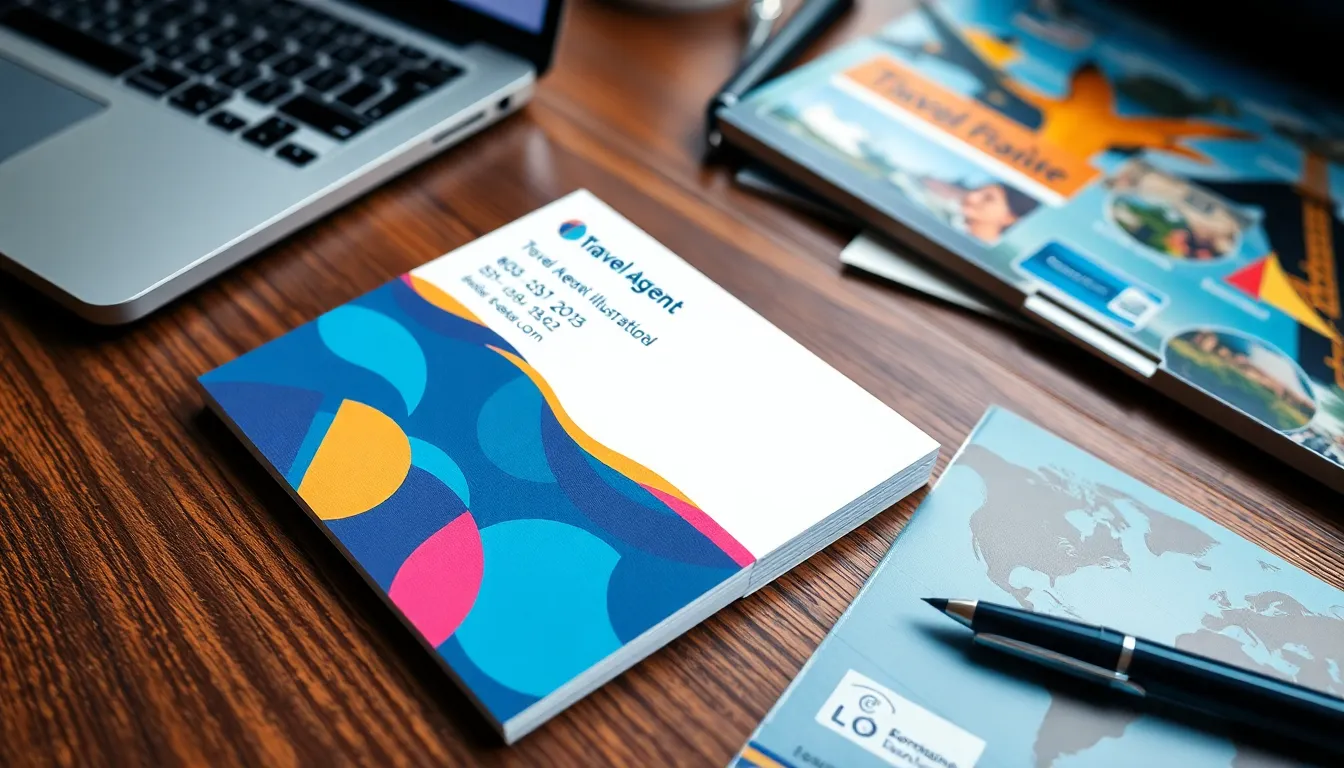
Effective business cards capture attention and leave lasting impressions. Utilizing strategic design and essential information enhances their impact in the travel industry.
Design and Layout
A clean, organized layout ensures clarity. Bold graphics evoke emotions while maintaining a professional appearance. Choose colors that reflect the travel agent’s brand identity to create a connection with potential clients. Unique shapes or textures can differentiate a card in a stack. Fonts must remain legible, even at smaller sizes. Visual hierarchy guides the reader’s eye toward crucial details. Ultimately, an appealing design fosters curiosity and encourages further conversation.
Essential Information to Include
Contact information forms the backbone of any business card. Include the travel agent’s name, phone number, email address, and website to facilitate easy communication. Highlight any relevant certifications or affiliations to enhance credibility. Social media handles provide additional touchpoints for engagement in today’s digital age. A memorable tagline can encapsulate the agent’s services, helping to evoke a sense of inspiration. Prioritizing concise content ensures readability and keeps the focus on key points that matter to potential clients.
Tips For Designing Travel Agent Business Cards
Designing effective travel agent business cards requires attention to detail and a clear understanding of branding elements. Thoughtful choices in color schemes and typography can significantly enhance the card’s overall appeal.
Choosing The Right Color Palette
Selecting a color palette aligns closely with the travel agent’s brand identity. Vibrant colors like blue or green often evoke feelings of adventure and tranquility. Soft pastels can convey sophistication while remaining approachable. Use contrasting colors to emphasize important details, ensuring essential information stands out. Limit the palette to three colors for cohesion and simplicity. Consistent use of colors throughout marketing materials reinforces brand recognition, creating a unified look that attracts potential clients.
Selecting Fonts and Graphics
Choosing the right fonts impacts readability and branding. Opt for clean, modern typefaces that reflect professionalism. Ensure that fonts remain legible at various sizes, as business cards are often viewed quickly. Mixing a bold headline font with a more subdued body font creates visual interest. Incorporating graphics should complement, not overwhelm, the design. Icons representing travel can effectively hint at services while maintaining a sleek appearance. Quality imagery and strategic placement enhance the card’s visual appeal, making it memorable for recipients.
Printing Options For Business Cards
Selecting the right printing options for business cards significantly impacts perception and effectiveness. The choices available enhance both the tactile experience and visual appeal.
Material Options
High-quality materials elevate the perception of a business card. Some agents opt for standard cardstock, known for its durability and affordability. Others choose premium materials such as textured linen or glossy finishes that convey luxury. Eco-friendly options, like recycled paper, also attract environmentally conscious clients while aligning with their values. Consideration of weight also plays a role; heavier cards often feel more substantial than lighter options. Agents should choose a material that reflects their brand and the impression they wish to create.
Size and Shape Variations
Business card sizes and shapes vary widely, allowing travel agents to showcase unique designs. Standard sizes, such as 3.5 x 2 inches, remain popular for their familiarity and convenience. However, non-traditional shapes like square or rounded corners can help cards stand out. Unique dimensions, such as vertical cards, might draw attention and encourage recipients to keep them. Custom die-cut shapes can also represent travel themes, such as airplane silhouettes. Selecting a size and shape that aligns with personal branding increases the chances of leaving a lasting impression.
Travel agent business cards are more than just a means of sharing contact information. They embody an agent’s brand and professionalism while serving as powerful marketing tools. By investing time and creativity into their design agents can create cards that not only capture attention but also inspire potential clients to embark on their next adventure.
Choosing the right materials and ensuring a cohesive design enhances the card’s impact. With a focus on strategic elements like color and typography agents can ensure their business cards leave a memorable impression. Ultimately a well-crafted business card can open doors to new opportunities and foster lasting relationships in the travel industry.

