

Sacred geometry isn’t just for art enthusiasts or math whizzes; it’s a cosmic language that connects the dots between nature, spirituality, and the universe. Imagine a world where shapes hold secrets, and patterns reveal the mysteries of existence. From the mesmerizing spirals of seashells to the intricate designs of ancient temples, sacred geometry invites everyone to explore the hidden order of creation.
What Is Sacred Geometry?
Sacred geometry represents the mathematical principles that govern the shapes and patterns found in nature, spirituality, and the cosmos. This ancient wisdom offers insights into the interconnectedness of all things.
The Origins of Sacred Geometry
Ancient civilizations often used sacred geometry in their architecture and art. Egyptians built the pyramids with precise geometric proportions. Ancient Greeks explored mathematical relationships through shapes. Indian texts discuss Yantras, geometric diagrams used in meditation. These origins reflect a deep understanding of cosmic order and harmony.
Key Concepts and Principles
The fundamental concepts of sacred geometry include shapes like the circle, triangle, and spiral. A circle represents unity and wholeness. Triangles symbolize balance and stability. Spirals, evident in nature, illustrate growth and evolution. The Flower of Life pattern encapsulates these ideas, representing the cycle of creation. Such principles encourage individuals to recognize the underlying mathematics in the natural world.
The Significance of Sacred Geometry
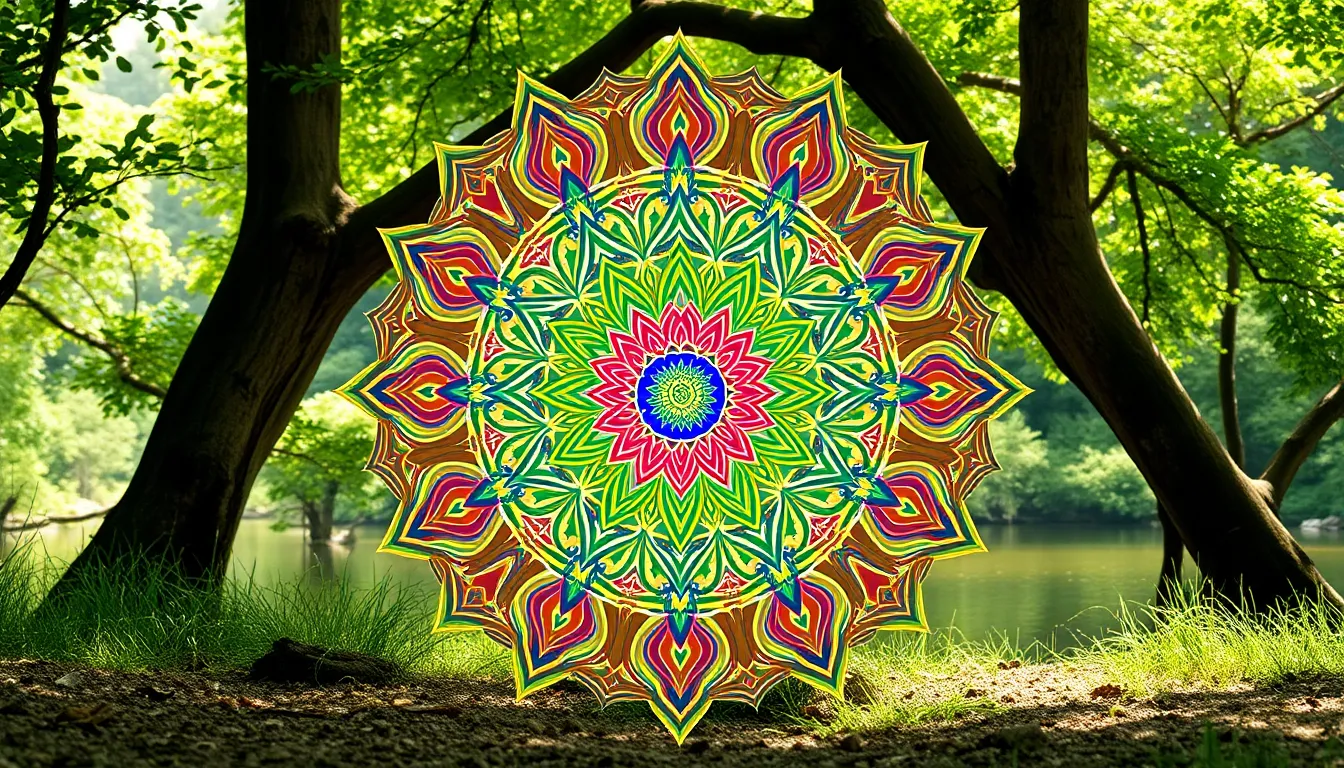
Sacred geometry holds deep significance across various disciplines, offering insights into spirituality, philosophy, and the arts.
Spiritual and Philosophical Implications
Spirituality finds a profound connection in sacred geometry, where shapes symbolize fundamental truths of existence. Patterns like circles and spirals express unity and divine creation, reflecting the interconnectedness of all beings. Philosophically, these geometric forms invite contemplation on the nature of reality and the universe’s design. Engaging with sacred geometry fosters a sense of harmony and purpose in life. Practitioners often use it as a tool for meditation, encouraging introspection and spiritual growth. The significance of this geometry transcends mere shapes, promoting a deeper understanding of one’s place within the cosmos.
Applications in Art and Architecture
Art and architecture showcase the practical applications of sacred geometry through design principles that evoke beauty and balance. Artists incorporate geometric patterns to create visually striking works that resonate emotionally with audiences. Iconic structures, such as the Parthenon and Chartres Cathedral, embody principles of sacred geometry, expressing harmony and proportion. Architects utilize these concepts to enhance spatial experiences and to foster connection within environments. The Flower of Life pattern often appears in decorative arts, emphasizing the relationship between design and nature. Through these applications, sacred geometry transforms both aesthetic expression and functional space.
Sacred Geometry in Nature
Sacred geometry manifests throughout the natural world, revealing patterns that reflect deeper truths about existence and interconnectedness. Nature exhibits incredible designs, showcasing the inherent geometry in various organisms and ecosystems.
Patterns Found in the Natural World
Shapes like spirals, fractals, and symmetry surface in countless natural formations. Seashells exhibit exquisite spiral patterns, mirroring the Fibonacci sequence. Flowers display petal arrangements in harmonic ratios, demonstrating aesthetic balance. Trees follow branching geometries, optimizing light capture and resource allocation. Honeybees construct hexagonal honeycombs, representing efficiency in space usage. Each instance provides insight into nature’s mathematical underpinnings, fostering appreciation for its design.
The Fibonacci Sequence and Its Relation
The Fibonacci sequence reveals itself in many natural phenomena, linking seemingly disparate elements of life. This sequence begins with zero and one, each subsequent number being the sum of the two preceding ones. Sunflower seeds radiate in spirals, aligning with Fibonacci numbers for optimal packing. Pinecones, pineapples, and even the arrangement of leaves on stems echo this sequence, illustrating nature’s reliance on mathematical order. The apparent simplicity of these patterns belies their complexity, reinforcing the notion of interconnectedness in biological growth and manifestation.
The Role of Sacred Geometry in Different Cultures
Sacred geometry plays a vital role in various cultures, illustrating its universal significance across time and geography.
Ancient Civilizations and Sacred Geometry
Ancient civilizations embraced sacred geometry as a framework for understanding the cosmos. Egyptians designed pyramids based on precise geometric principles, reflecting their beliefs in the afterlife and cosmic order. The Greeks explored mathematical concepts that linked shapes to philosophical ideas, with notable figures like Plato emphasizing the importance of geometry in understanding the universe’s structure. Indian traditions incorporated sacred geometry within temple designs, demonstrating the interconnectedness of space and divinity. These geometric patterns in ancient sites reveal humanity’s quest for meaning through the harmony and balance that geometry represents.
Modern Interpretations and Practices
Modern interpretations of sacred geometry continue to influence spirituality and art. Various contemporary practices draw from ancient wisdom, applying geometric designs to meditation and healing. Enthusiasts utilize shapes like the Flower of Life to enhance mindfulness and spiritual awareness. Artists integrate sacred geometry into their creations, enabling viewers to connect with deeper meanings and transcendental experiences. Moreover, architectural designs often incorporate these principles, fostering environments that promote harmony and balance. The resurgence of interest in sacred geometry reflects its timeless relevance and profound impact on how individuals perceive their relationship with the universe.
Sacred geometry serves as a bridge connecting humanity to the universe’s intricate patterns and profound truths. By recognizing the mathematical principles underlying natural formations and spiritual designs, individuals can deepen their understanding of existence. This exploration fosters a sense of unity and balance, encouraging personal growth and introspection. As sacred geometry continues to inspire art, architecture, and spiritual practices, its relevance remains timeless. Engaging with these geometric principles invites a richer appreciation of the world, reminding everyone of the interconnectedness that defines life itself.

