
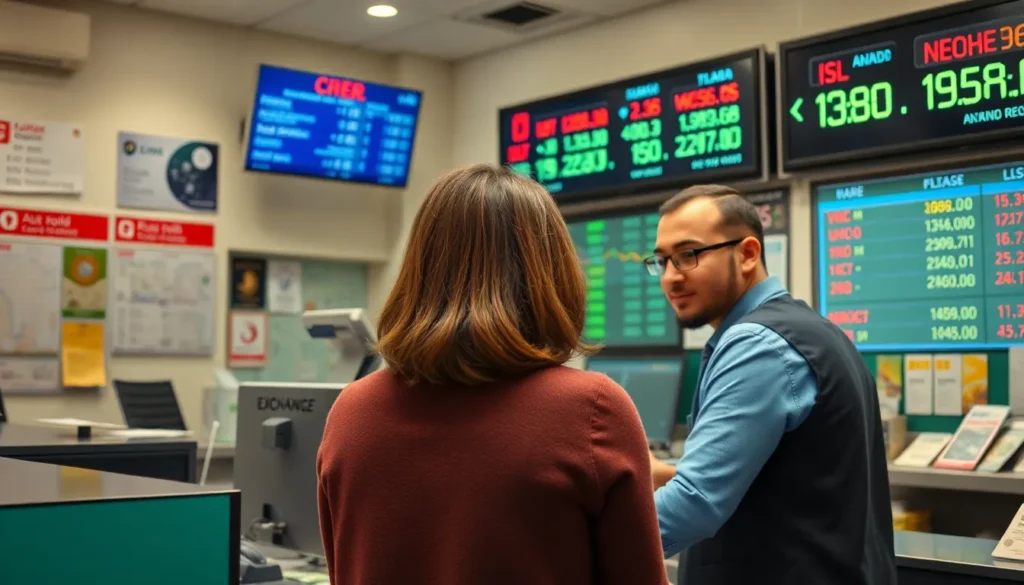
Are you ready to dive into the thrilling world of currency exchange? Today’s EUR to ILS exchange rate might just be the financial rollercoaster you’ve been waiting for. Whether you’re planning a trip to Israel or simply trying to impress your friends with your currency knowledge, understanding this exchange rate can make all the difference.
Overview of EUR ILS Exchange Rate
The EUR to ILS exchange rate reflects the value of the Euro against the Israeli Shekel. Current fluctuations in this rate can significantly impact travelers and businesses conducting transactions between Europe and Israel. Real-time data sources show that, as of today, the exchange rate stands at approximately 4.22 ILS per 1 EUR.
Rates vary throughout the day due to market conditions, so staying updated is essential. Economic factors such as inflation, interest rates, and geopolitical events influence these values. Traders and financial analysts closely monitor these indicators to make informed decisions.
Historical analysis of the EUR to ILS exchange rate reveals trends over the past years. For example, in 2020, the rate fluctuated between 4.00 and 4.50 ILS per Euro, illustrating the effects of the global pandemic on currency values. This context helps individuals understand present dynamics and possible future changes.
For anyone exchanging currencies, knowing the current rate avoids unfavorable trades. Additionally, using reliable financial news platforms ensures access to accurate and timely data on currency trends.
Investors interested in forex markets find the EUR to ILS rate a vital indicator for assessing economic health in both regions. Understanding this exchange rate forms a key part of any currency strategy.
Factors Influencing EUR ILS Exchange Rate Today

Various factors affect the EUR to ILS exchange rate today. Understanding these influences helps in making informed currency trades and investment decisions.
Economic Indicators
Economic indicators, such as inflation rates, employment data, and GDP growth, play a significant role in currency valuation. High inflation in the Eurozone can weaken the Euro against the Israeli Shekel. Conversely, robust economic growth in Israel often bolsters the Shekel. Interest rates established by the European Central Bank and the Bank of Israel also impact exchange rates directly. Higher interest rates typically attract foreign investment, increasing demand for a currency. For example, if the ECB raises interest rates, the Euro may appreciate against the Shekel. Market analysts closely monitor these indicators to predict trends in the EUR to ILS exchange rate.
Political Climate
Political stability affects currency confidence and exchange rates. In Israel, recent elections or political tensions can create market uncertainty, negatively influencing the Shekel. The Eurozone’s political landscape, including Brexit negotiations and EU policies, also has a profound impact. Economic sanctions or trade agreements alter the supply and demand for currencies. For instance, positive diplomatic relations in Europe can elevate confidence in the Euro, while conflicts may lead to depreciation. Investors keep a watchful eye on political developments, understanding their potential effects on currency exchange.
Historical Trends of EUR ILS Exchange Rate
The EUR to ILS exchange rate has exhibited notable fluctuations over the years. In 2020, the rate ranged between 4.00 and 4.50 ILS per Euro, reflecting the broader economic impacts of the global pandemic. Variations in 2021 and beyond continued to demonstrate how external factors influence currency values. Increased vaccine rollouts in Europe positively impacted the Euro, leading to gradual strengthening against the Shekel during recovery periods.
Noteworthy patterns in the exchange rate reveal how geopolitical events affect currency stability. For instance, tensions in both the Eurozone and Israel often result in short-term volatility. Market participants react quickly to political developments, with changes influencing confidence in currency values.
Statistics from previous years reveal monthly trends that highlight seasonal fluctuations. In 2019, the average exchange rate hovered around 4.30 ILS per Euro, showing relative stability before the pandemic’s economic disruptions. Monthly averages allow for deeper insights into typical trading values and help investors anticipate future scenarios.
Analyzing the historical data helps clarify broader economic conditions. The currency dynamics serve as indicators for economic health in both regions. Historical trends underscore the critical role factors like inflation and employment figures play in shaping exchange rates. It is essential to follow these trends closely for informed trading decisions.
Understanding the historical context behind the EUR to ILS exchange rate equips travelers and investors with vital knowledge. Currency trading strategies often depend on recognizing these patterns, enabling better planning and decision-making in fluctuating markets.
Current Exchange Rate Analysis
The EUR to ILS exchange rate fluctuates based on various economic factors impacting currency valuation. Current observations show the rate is approximately 4.22 ILS for every Euro.
Comparison with Previous Rates
In 2020, the EUR to ILS rate varied between 4.00 and 4.50 ILS, illustrating the pandemic’s dramatic effects on currency values. Monthly averages from 2019 highlighted a more stable rate of around 4.30 ILS per Euro, showcasing the pre-pandemic market conditions. Observing these historical rates indicates how the Euro has strengthened in recent months, aligning with improvements in European economies and vaccination rollouts. Comparing these shifts helps identify patterns that can inform traders and investors about potential future movements.
Market Predictions
Experts anticipate that economic recovery in the Eurozone may strengthen the Euro against the Shekel. Inflation levels and interest rates remain pivotal to these predictions; as central banks adjust rates, currency demand fluctuates. Analyzing recent employment data and GDP growth trends indicates a cautious optimism for the Euro’s performance. Geopolitical tensions can introduce volatility, yet market analysts note that stable political environments could bolster investor confidence. Predictions emphasize the necessity of monitoring economic announcements and political developments to navigate potential changes in the exchange rate.
Implications for Investors
Investors closely analyze the EUR to ILS exchange rate for valuable insights. Understanding trends helps optimize currency trades. The current rate of approximately 4.22 ILS per Euro highlights market conditions. Factors such as inflation, interest rates, and political stability directly influence this rate. Knowing these influences enables strategic investment decisions.
Rising inflation in the Eurozone could weaken the Euro against the Shekel. Higher interest rates, on the other hand, encourage foreign investment, strengthening the Euro. Investors watch central bank announcements to gauge potential shifts.
Political events also play a significant role. Uncertainties in Israel’s political climate, especially during elections, can create volatility. Developments in the Eurozone, like Brexit implications, further affect investor confidence.
Historical trends provide context for current decisions. Rates fluctuated between 4.00 and 4.50 ILS per Euro in 2020 due to the pandemic’s economic impacts. Analyzing previous years’ rates, such as the 4.30 ILS average in 2019, reveals pre-pandemic stability.
Ongoing economic recovery in the Eurozone may lead to a stronger Euro moving forward. Employment figures and GDP growth are indicators that help predict future movements. Staying informed about news and economic reports is crucial for navigating changes in the exchange rate effectively.
Staying informed about the EUR to ILS exchange rate is essential for travelers and investors alike. The current rate of approximately 4.22 ILS per Euro reflects ongoing economic dynamics that could shift rapidly. Monitoring inflation, interest rates, and geopolitical developments will provide valuable insights into future trends.
As the Eurozone continues its economic recovery, understanding these factors will help individuals make informed decisions. Whether planning a trip or engaging in currency trading, awareness of the market’s fluctuations can lead to better financial outcomes.

